


Colorful Medellín is a favorite among travelers. Often preferred over Bogotá because of its year-round pleasant temperatures and wide array of activities, the city of eternal spring is a must-visit on your Colombia itinerary.
But as I visited the city for the first time, I was overwhelmed by the sheer size of it. Even though it’s so much smaller than the capital, there was just so much to do in Medellín that I had a hard time establishing my itinerary. In the end, I wished I would have had much more time here.
To prevent you from that same sensation, I have written this complete things to do in Medellín guide. I cover everything from the famous Comuna 13 and Plaza Botéro to daytrips like Guatapé and lesser-known places like my favorite Colombian fashion brand. But not before I answer this burning question: is doing a Pablo Escobar tour responsible? (Spoiler alert: it most likely does more harm than good.)
In a hurry? These are my three favorite hotels in Medellín 🛏️
Luxury: Elcielo Hotel Luxury Medellin – check rates & availability here
Mid-range: Urbit Social Lofts– check rates & availability here
Budget: Poblado Luum Boutique Hotel – check rates & availability here

Responsible Travel & Pablo Escobar Tours
The number one thing you shouldn’t do in Medellín is a Pablo Escobar tour, especially if you care about traveling responsibly. Why? Well, then you’ll have to bear with me as I let my academic nature out for its daily walk. If you don’t care for any of that, skip ahead to the conclusion, but I warn you: you want to read the meat of the why someday.
So, buckle up, mute your phones, and get ready for a lecture by yours truly.
Responsible, conscious and sustainable travel goes much further than minimizing plastic use, prioritizing overland travel and booking ecolodges. While these things are important, actual responsible travel has to do with the interconnectedness and interdependence of our planet. Everything in our lives and on our world is connected to each other: people, places, nature, history and more. Their existence is also often dependent on the actions of other things in that complex network. What you do on any given day often does not only affect the people around you, but its consequences bleed through other parts of that system.
Similarly, our colonial past still impacts our post-colonial and neo-colonial present. The largest example of this is the division of power and labor across the globe: most of the political and economic power is still in the hands of former colonizers, while the formerly colonized still produce clothes, food, and technology for the former colonizers. In this case, our history has not only shaped the present, but lots of the Global Northerners of this world exacerbate unfair and exploitative labor elsewhere by simply buying a fast fashion t-shirt or buying the latest smartphone. You and I are thus partially responsible by maintaining – and sometimes worsening – the status quo.


This might sound complicated, but this philosophy rests on the simple principle of cause and effect: every action has a consequence. But you can’t always directly see that consequence, especially when it’s a small gesture like buying a t-shirt. Here lies the crux of responsible tourism, though, and it goes further than decolonizing our minds. Being a responsible tourist means being aware of how youractions impact others, how the past, politics, economics and culture shape the context in which these actions happen, and how your action engages with that context. It can exacerbate it, perpetuate it, reiterate it, or change it, both for better and for worse.
Phew, that’s a mouthful, isn’t it? But it’s important to realize that the choices we make, no matter how small, can impact the lives of people you haven’t met, and nature. You can even support unethical power systems and struggles without intending to. One simple t-shirt thus has an incredible impact.
In short, this means individuals carry incredible power, which can also be positive. Especially when you’re a traveler planning on spending their money and time in a destination. As a tourist, whatever you spend your money and time on can either exacerbate inequalities, or aid in lifting them and making the world a better place for everyone. Yes, small acts have power.


To understand your impact on the world though, you also must aim to understand said world. While you can never know everything, translating this to travel means you research the destination you’re visiting beforehand. Before traveling anywhere, ask yourself the following questions:
- What historical facts are important?
- How have these shaped the country, region, or city I’m traveling to?
- And how do the residents feel about it?
- Are there any taboos or cultural norms I should be aware about?
- Has the destination’s and global history led to any inequalities and injustices?
- Can my travel choices (hotels, tours and other activities I spent money on) influence these inequalities and injustices?
This list is of course not exhaustible, but you can imagine this asks some effort from you as a traveler. But once you have researched a bit, you can know do something that is not only fun, but makes your travels mean something: see how you can leave a positive impact. In the case of Colombia and Medellín, this leads to the following conclusion.
Why You Shouldn’t Do a Pablo Escobar Tour
For lots of tourists, Pablo Escobar has gotten a cult status through Netflix hit series like Narcos. For Colombians, though, Pablo Escobar and his drug imperium form one of the darkest pages in their history. He’s not an icon; he was one of the worst terrorists this world has ever seen. His actions have led to the death of roughly 8000 humans, and he’s caused more trauma and pain for millions of others than you can imagine. He bombed airplanes, blew up buses, and offered $1000 for the lives of any policemen in Medellín, which became the death sentence of many.

This recent history is still fresh in the minds of many Colombians. In the meantime, though, Colombia has fought hard to transform itself and find joy again. Unfortunately, the stereotype of the country still revolves around cocaine and (the lack of) safety. From the trauma, to the hard work it took to rebuild and this persisting stereotype: all of these are reasons Colombian prefer to focus on the positive and beautiful sides of their home country. Focusing on the things that make Colombia so beautiful, like Salento’s coffee region or their salsa culture, helps to rewrite the narrative and battle the stereotype.
Some basic rules are thus, don’t mention Pablo Escobar, and don’t wear his likeness on t-shirts or other petty merchandise. If you want to learn more about the drug trafficking history, then ask about the drug trafficking history and how the Colombians have bounced back from it. Show interest in them, not the guy who has terrorized and ruined their lives or those of people closest to them.
When it comes to Pablo Escobar tours, you not only feed the stereotype, but you also put money in the pockets of his former accomplices. Many of these tours include a meet and greet with the man’s brother, who gets paid for his appearance, or are organized by former drug traffickers. This, including the reasons above, show you why booking a Pablo Escobar tour is not only inconsiderate but actively harms Colombia and its people. A great alternative is doing a private historical tour of the city, or the colorful Comuna 13 neighborhood.

34 Best Things to Do in Medellín
1. Comuna 13
One of the best things to do is a guided tour of Comuna 13. This is the first thing I did once we arrived in Medellín and I loved it. We went early in the morning, so it was still relatively quiet on the streets. All we saw were cats and the residents setting up shop. With our tour guide telling us about the history of the community and some time to explore by myself, I got an incredible view of this interesting part of Medellín.
Comuna 13 is one of the neighborhoods or communes that were connected to the drug trafficking routes, as well as FARC territories in the mountains behind it. This made Comuna 13 incredibly dangerous: drug and paramilitary-related violence ruled the lives of its residents, as well as the violence that followed the siege waged by the police and military against the gangs in 2002. While this siege lessened the violence to an extent, the truce ending most of it was signed ten years later.
In the meantime, the president made Comuna 13 more accessible by building a gondola and numerous escalators. Slowly but steadily, the community rebuilt itself and became the colorful street art Walhalla it is today. Visiting Comuna 13 with a guide is thus a must if you wish to learn more about the city’s, and ultimately Colombia’s, history. You can also combine a visit to the area with a ride on Medellín’s gondola for splendid views of the city with this tour.

2. Plaza Botéro
While you’ll find many of Botéro’s artworks in his namesake museum in Bogotá, Plaza Botéro in Medellín offers another experience entirely. Fernando Botéro was a Colombian painter and sculptor known for his distinctive style, which I like to call the art of chunky proportions. During his life, he was passionate about making art accessible for all, not just the wealthy few. Which is why he generously donated 23 sculptures to the municipality of Medellín, with the prerequisite of placing them outside in the city center.
And that’s how Plaza Botéro was born. The large bronze sculptures of horses, women, heads and soldiers sparkle in the sunlight, especially on the spots where people have rubbed them for good luck. Seeing the artworks is one of the best things to do in Medellín, and can be combined with a visit to the Museo de Antioquia and the Rafael Uribe Uribe Palace of Culture.
Don’t visit the square without a guide though and never visit at night. Medellín’s old town, La Candelaria, gets dangerous at night when drug addicts and other shady folk roam its streets. La Candelaria in Bogotá’s dangers at night pale in comparison. During the day it’s safer, but I nearly got robbed when I was trying to give some lovely musicians a tip. So, I strongly recommend going with a guide or an organized tour.


3. Rooftop View on the Rafael Uribe Uribe Palace of Culture
This one was a secret spot tipped by our tour guide: the rooftop of the Rafael Uribe Uribe Palace of Culture. This Gothic style building hosts concerts, art exhibitions and an extensive historical archive. But the most incredible thing to do here during golden hour is to see downtown Medellín from its rooftop. Linger around its courtyards and museum as well if you have the time.


4. Parque Arvi
Parque Arvi is Medellín’s closest nature reserve and a popular destination for day hikes. Along its numerous hiking trails, you can spot Colombia’s national flower, the orchid, and hundreds of different bird species. The latter is even exciting for non-aviphiles, since Colombia is home to 20% of the world’s bird population and has over 2000 species flying around. When I spotted my first hummingbird in Salento, I was so happy, you wouldn’t think I know absolutely nothing about birds.
But the best part about Parque Arvi? You can easily reach the forest by taking the metrocable from Medellín, which makes it the perfect daytrip for when you want to escape the city for a bit. Besides hiking, you can go horseback riding or explore the reserve on a mountain bike. Whatever you do, though, don’t visit the park alone. While it’s generally considered safe, there have been robberies here, so it’s safer to go with a guide.
The park is open from Tuesday to Sunday, from 9 am to 6 pm, which means there’s plenty of time to explore. Want to turn it into a weekend getaway? Then you can stay in Hotel y Parque Ecológico Piedras Blancas. But when you do, don’t wander around the forest at night.
5. Salsa Class and Social
I fell in love with salsa during my trip to Colombia. In fact, I loved it so much, I started taking lessons in Amsterdam in September 2026 and haven’t stopped since! But I’ll never forget my first salsa class and social in Medellín, where I learned that I could be feminine and dance simultaneously. Who would’ve thought? I didn’t, as I always thought I was a terrible dancer.
Besides fixing some old insecurities, Colombia – the salsa capital of the world – also made me realize dancing was supposed to be fun, social and joyful. Salsa is so ingrained in the country and city’s social scene, that it’s one of the best things to do in Medellín. My traveling party and I booked our lessons at Dancefree in the El Poblado neighborhood. You can see the teachers dancing in the video’s below, if you want proof of their skills!
6. Jardín Botanico
My biggest regret from my trip to Medellín is not visiting the Jardín Botanico. In case you didn’t know, I was in Colombia for a photography assignment. The morning before we took a plane to Cartagena we still had some time to visit the Jardín Botanico. But since I already had so many images, I decided to sit this one out and edit instead.
When my travel companions came back and were so excited about the place, I knew I’d missed a gem. The picture you see below is of the Orchideorama, an impressive piece of architecture that shelters and preserves a vast collection of orchids. That, combined with the tranquil atmosphere and 4500 other flowers, makes this botanical garden stand out. The Jardín Botanico can thus not be missed on your Medellín itinerary!
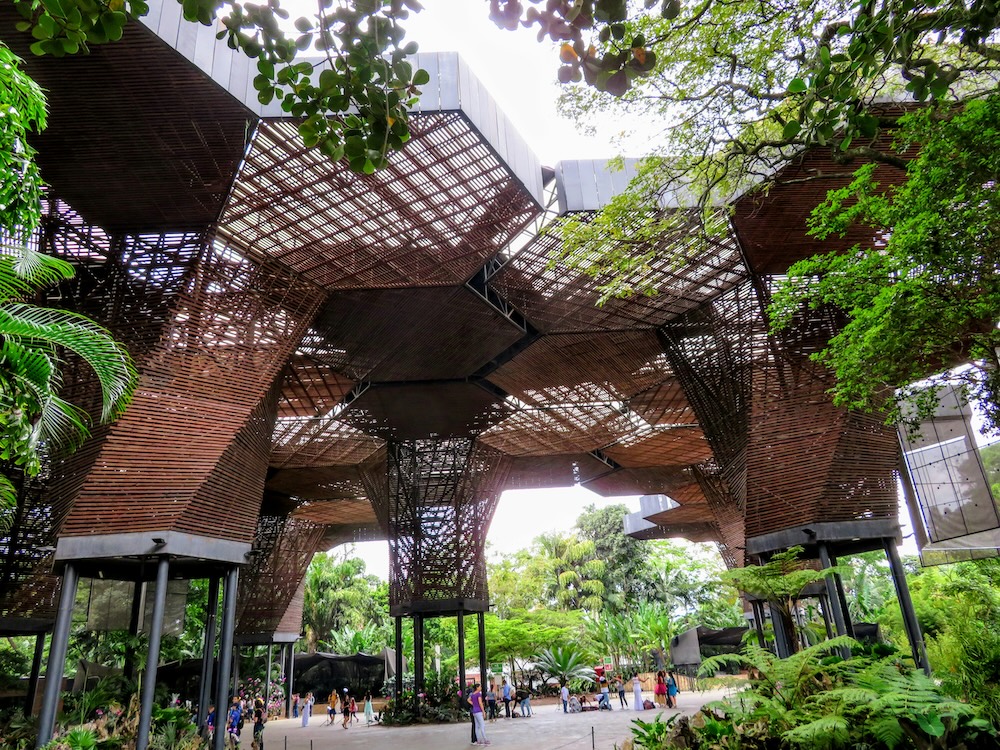
Photo by Oneil Williams on Unsplash
7. Paragliding
This one is for the dare devils out there: paragliding over Medellin’s valley and surrounding mountains. I would personally never do this, just like I’d never jump out of an airplane, but I’ve heard fellow travelers say it’s one of the best ways to see Medellín. Go with a tour like this one that includes pick-up and drop-off from your hotel, and does aerial tricks if you ask them!
8. Walking tour
A guidebook will only get you so far when exploring a new destination. Why? Because the best way to learn about a city’s culture, history and daily life is through listening to its residents. Medellín is also so big, with such a complex past and present, that I think a guided walking tour is a must-do.
The two guided tours I did really made my Medellín trip pop. I not only got to go to places that were too dangerous to visit by myself, but I also got a whole new appreciation for humankind’s resilience.
Generally, there are two types of walking tours you can do in Medellín. Some tours take you through Comuna 13, which I did on my first morning. Others show you around downtown Medellín. This part of the city is often too dangerous for tourists to visit by themselves, so in this case having a guide is not only educational, but necessary as well.


9. Try Bandeja Paisa
Bandeja Paisa is a traditional dish from the Antioquia region, of which Medellín is the capital. Consisting of, but not limited to, red beans, rice, meat, chicharrón, arepa eggs, plantain, black pudding, avocado and lemon, this platter is extremely hearty. It’s thus the perfect lunch or dinner during or after an extensive walking tour. Try it in downtown Medellín at Restaurante Hacienda Junín, a traditional Colombian restaurant.

Photo by WILLIAN REIS on Unsplash
10. Cooking class
Besides eating Colombian food, learning how to make it gives you a whole new level of appreciation. Taking a cooking class and learning a new recipe is also the best souvenir you can give yourself. So, if you have a couple of days in Medellín, book an empanada cooking class in the city, or head to this organic farm for the complete gourmet experience.
11. El Poblado
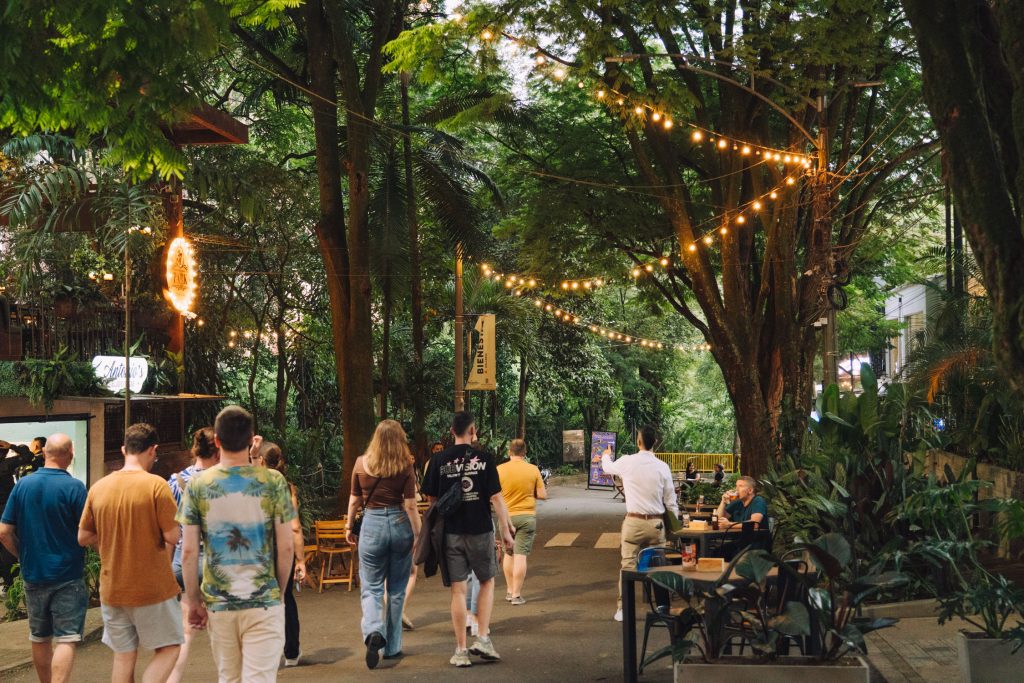
When visiting Medellín, El Poblado will probably be your homebase. This area is home to the city’s best restaurants, clubs and hotels, and one of the safer areas in town for tourists. I stayed here during my time in the city and loved the atmosphere! It’s incredibly green, with pedestrian zones surrounded by lush parks and trees lining every street.
Spending some time exploring the neighborhood’s smaller areas and sights is thus one of the best things to do in Medellín. Here, you can eat some of the finest Mexican food, shop at Colombian brands like my favorite, Agua Bendita, visit the Modern Art Museum, and even marvel at castles. Do be vigilant at night, though, especially when you’re a guy! In El Poblado’s nightclubs some women drug men to get into their hotel rooms and rob them. While this is criminal behavior, El Poblado is thus one of the few places in the world where men get to walk in women’s shoes for a night.
12. Bike tour
Want to see a lot, but have limited time? Then a bike tour is one of the best things to do in Medellín. Where a walking tour is often limited to one neighborhood, a bike tour takes you past main sights, local recommendations and the best spots to get coffee. This tour in particular is as versatile as the city itself.

13. Views From the Metrocable
Medellín is located in the Andes, which means the city itself spreads over numerous mountains and valleys. With such a rugged terrain, it only makes sense that the metrocable one of the main modes of transportation. These gondolas have made life easier for all paisas (the people from Medellín), but especially those living in high-altitude barrios.
But besides being a practical solution, the metrocable also provides incredible views of the city. Buy a ticket at one of the main metro stations and ride one line up and back down. If you’ve been walking all day, this is the best way to rest, recover and explore at the same time. Tour operators have also figured that out, which is why it’s often part of Comuna 13 walking tours.

14. Casa de la Memoria Museum
The Casa de la Memoria is more than a museum: it’s a place where the victims of Medellín’s urban violence are honored, remembered, and given a voice. The museum tells the story of the violent conflict that raged through neighborhoods like Comuna 13 and how the people of Medellín resisted.
If you’re looking to learn more about Medellín and care about being a responsible traveler, then this museum is a must-visit. As you might remember from my lecture above, Colombians prefer to live in the present and look to the future, in which they can embrace the beauty of everyday life in their country. But the Casa de La Memoria is one of the places where they can grieve and remember. Remembering the past in this context is a way of looking to the future, as we can learn from it, and create something beautiful and joyful in the process.
15. Museo de Antioquia
Liked Plaza Botéro? Then you’ll love the Museo de Antioquia. This art museum showcases over a 100 works by Colombian artist Fernando Botéro. Showcasing both sculptures and paintings, it’s the best alternative to the free Botéro Museum in Bogotá. Although, unlike its eastern counterpart, the Museo de Antioquia is not free for tourists. But the 46.000 pesos are worth it!
You can visit the museum daily and combine it with a visit to the square and the Rafael Uribe Uribe Palace of Culture. As I mentioned before, it’s best to visit downtown Medellín on a walking tour. So, check with your guide whether you have time to enter the museum, or if they can help you find it at the end of the tour.


16. Museo de Arte Moderno
If you love architecture and modern art, you must visit the Museo de Arte Moderno in Medellín. The museum’s building is an artwork in itself, with its intricate concrete and steel design that are meant to resemble the haphazard yet beautiful homes of the hillside barrios. Inside, there’s an extensive permanent exhibition showcasing Colombian modern and contemporary art, and several temporary exhibitions focusing on notable local and other Latin American artists.
You can visit the museum every day, except on Mondays, and tickets cost around €5. So, if you want to go beyond Botéro’s famous works, this is the place to be!
17. Coffee farm tour
Colombian coffee is world-famous. Their light roasts with earthy and nutty tones make some of the best specialty coffee. I can’t count the numerous times I’ve had a Colombian cappuccino in Amsterdam. So, what better place to learn all about the coffee making process than in Colombia?
I went on a coffee farm tour in Salento, the country’s famous coffee region, but the hills around Medellín are packed with farms as well. So, if you’re a coffee aficionado, not visiting Salento, or just have a free afternoon in Medellín, then doing a coffee farm tour is a must-do.
On the tour you learn everything about the coffee making process. From picking the bean in the fields, drying, roasting and infusing it, and then brewing the finished product. I found it incredibly valuable and inspirational to learn about how our guide incorporated permaculture in their practice to eliminate the need for pesticides. This gave me hope for our beautiful planet!

18. Rafting
And now for an extreme sport I would do, as opposed to the paragliding mentioned above: rafting. The nearby Calderas River offers some exciting rapids and is only 1:45 hours away from Medellín by car. And besides the adrenaline, rafting is also a great way to experience more of Colombia’s stunning nature. During the quieter bits of the tour, you get to see numerous bird species and colorful flowers.
Most tours like this one start from Cocorna, which is close to Guatapé. So, you can catch two birds with one stone by rafting in the morning, and visit Guatapé in the afternoon.
19. Day trip to Guatapé
On my second day in Medellín, I visited the nearby town of Guatapé and the famous monolith El Peñol. While the rock and the views from its top were impressive, the village itself was such a treat! Each windowsill and doorway was painted in vibrant colors, and the walls featured gorgeous murals. Since we visited in the low season, it was also super quiet and relaxed: a welcome change from the bustling Medellín!
Take the bus to Guatapé early in the morning. Visit the monolith El Peñol first, and then have lunch in the village. After wandering around for a bit, go on a boat tour of the surrounding lakes. You can schedule all of this by yourself, or go on a tour like this one, which takes care of everything for you.


20. Pueblito Paisa
If a daytrip to Guatapé doesn’t fit in your itinerary, then Pueblito Paisa is a good alternative. Not unlike Guatapé, this village is a recreation of the many historical pueblos in the region. In the 1970s, a massive hydroelectric power plant was built just outside Medellín, which led to the flooding of many historical dwellings. While the current Guatapé is meant to be a replica of its former version, Pueblito Paisa was built to commemorate these villages by reusing building materials from these towns.
You can visit the small Pueblito Paisa any day of the week, but do expect crowds in the afternoons.

Photo by Gustavo Sánchez on Unsplash
21. Find a Rooftop Bar
The first thing that comes to mind when thinking of Medellín is the view from our hotel’s rooftop bar. Hotel Dix had a fabulous terrace overlooking the city’s hills, which became especially magical at night. Seeing the city from up high with a drink in hand just hits different! Find yourself a similar hotel or visit one of El Poblado’s numerous rooftop bars on one of your nights in Medellín.


22. Play Tejo
Wherever you go in Colombia, you must play tejo at least once. Tejo is Colombia’s national sport, combining clay, discs and explosives. Players throw their discs at a bucket of clay containing hidden explosives, and when they hit one, they win points. While the rules are more intricate than I’d be able to explain, it’s easy enough to play for a night.
Since Bogotá offers more accessible places in to play tejo with friends, I recommend doing a tejo and beer tour in Medellín. This one includes a hotel pick-up and drop-off, which is the safest way to get in and out of the tejo venue.
23. Food Tour
As I mentioned before, El Poblado is the place to go for good food, drinks and nightlife. Doing a food tour here is thus a must. Getting to try all the amazing Colombian staples in one night is the best way to explore Medellín, in my opinion. Especially since I’ve sampled some of El Poblado’s finest plates.
Think a food tour will clog your itinerary too much, though? Then don’t worry, because this one will feed you a proper dinner and show you around El Poblado’s best bars, including a fun rooftop bar. This way, you can combine the neighborhoods culinary scene with its nightlife.

24. Mercado del Rio
Prefer to curate your own food tour? Then head to El Poblado’s Mercado del Rio, an indoor food court serving staples from Antiquoia like Bandeja Paisa, fresh sushi, Peruvian cuisine and much more. With so many options, it’s also a great place if you’ve had Colombian food every day of your trip and are craving something different. Have a cocktail here too, as they’re supposed to be great.
25. Plaza Minorista Market
The Plaza Minorista Market is one of those places I’d love to visit when I get back to Medellín someday. This gigantic fresh produce market is where residents and business owners buy their stock. Papayas, fresh fish and plantains line its hallways, and you can hear sellers and buyers haggle in quick Spanish.
It’s best to visit the market before 2pm, when most stalls close for the day. Get there early and stick around for lunch, which is supposed to be very good.
26. Agua Bendita Store
Do you see that dress in the pictures below? Isn’t it gorgeous, and don’t I look like a princess? And before you say no, just know that I feel like a princess whenever I wear it.
I usually don’t include clothing stores in my things to do guides, but Agua Bendita is the exception. This Colombian brand sells the most beautiful pieces. All their patterns you see are hand drawn, and the dresses themselves are of incredible quality. No stitch is crooked and everything accentuates the right parts of the body. If you’re still looking for a special souvenir, then this is the place to go!
Agua Bendita has multiple stores across Medellín and Colombia, but the one I visited was in Provenza. This one was rather small though, so do some research beforehand if you want more options.


27. San Alejo Handicraft Market
The San Alejo Handicraft Market strikes down on Parque Bolívar every first Saturday of the month. And has done so for centuries. Here, Medellín’s residents sell their handmade wares: from wooden clocks, to jewelry, bags and art. It’s mostly frequented by paisas (Medellín’s residents), but some tourists have found their way here. I unfortunately didn’t have the time to visit, but will definitely do so next time around.
28. Mexican Food
Yes, whenever you visit a country you must try the local cuisine, but you can’t expect the residents to eat Colombian food every day. That’s why there’s a plethora of incredible Mexican food around! From fancy restaurants to street vendors: you’ll find tacos everywhere in El Poblado. I particularly loved Criminal Taqueria’s tacos. So much, even, that I came back twice.
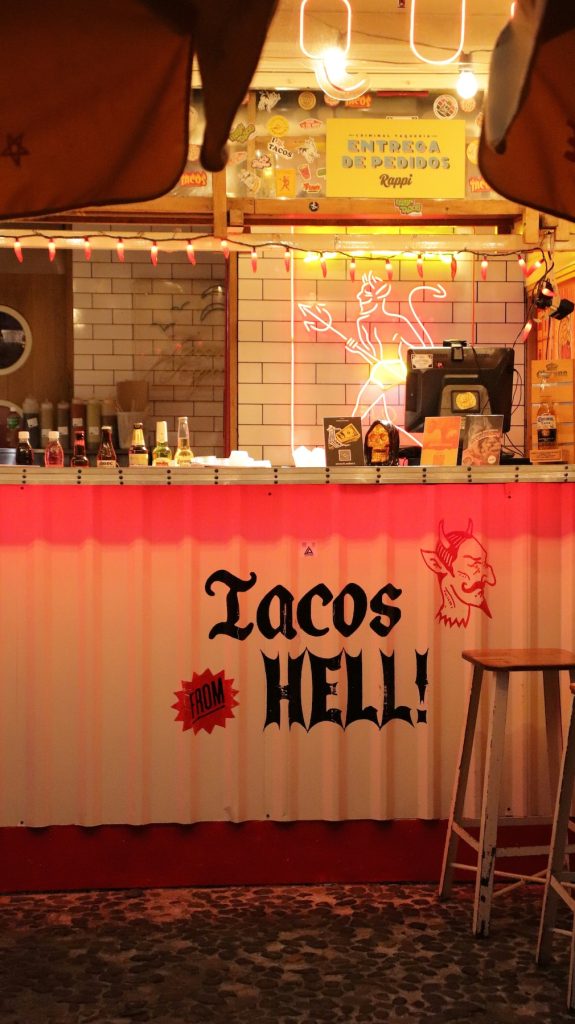
Photo by Julia Mayo on Unsplash, video by me
29. Colombian Food at Restaurante Hacienda Junín
During my time in Medellín, I had the best Colombian food at Restaurante Hacienda Junín. While I tried Bogotá’s main dish Ajiacio here, my fellow travelers tried their Bandeja Paisa, which was incredible.
The restaurant is located in downtown Medellín, but despite the hectic energy of this neighborhood, Hacienda Junín feels chill. The main restaurant is on the first floor and its décor makes you feel like you’re in an actual hacienda. It’s thus a must visit for lunch after your walking tour of the city center.

30. Soccer game at Estadio Atanasio Girardot
Soccer fans will want to attend a soccer match at the Estadio Atanasio Girardot. This massive stadium is the home of Medellín’s two most prominent football clubs: Atlético Nacional and Independiente Medellín. Since soccer is huge in Colombia, you’ll be able to attend a game nearly every week of the year. Check the website of the soccer teams for the latest matches and tickets.
Important note: the stadium will mostly be closed for the entirety of 2027 due to renovations. So make sure to check your ticket for the correct stadium.
31. Feria de las Flores in August
The most enchanting time to be in Medellín is during the Feria de las Flores. Every August, the city explodes with thousands of flowers hanging from buildings, buses and people. There are numerous parades, concerts, and festivities, from the classic car parade to the troubadour contest.
But the stars of the show are the silleteros. The Feria de Las Flores was founded to celebrate their culture and traditions. Sillateros are the traditional flower farmers of the nearby Santa Elena area. During the main parade, hundreds sillateros show their heritage and skill through carrying intricate, and mighty heavy, floral arrangements on their backs. These artworks are reminiscent of the sillateros who used to carry their wares and people up and down the mountains, and thus celebrate Antioquian heritage this way.
Not visiting Medellín in August? Then you can also tour the flower farms of Santa Elena during the rest of the year.
2027 dates 📅 The Feria de las Flores will take place from July 30 to August 8 in 2027.
32. Horseback Riding
I went horseback riding in San Agustin, Colombia’s archeological hotspot, which happened to be my first time on a horse! While I enjoyed it, I figured another great place for horseback riding would be the mountains surrounding Medellín. While trotting or, my favorite, galloping, you not only get to see beautiful nature, but panoramic views of the city as well.
In the case of horseback riding abroad, it’s always best to go with a tour. This one takes you along scenic mountain trails and will spend some time on Arriero culture and the history of horses and horseback riding. So, even if you’ve never considered horseback riding before, it can be an educational and thrilling activity!

While I didn’t go horseback riding in Medellín, I did do so in San Agustin
33. Hiking
While I love traveling through cities, I start to crave nature after a couple of days. And if you’re like me, you’re in luck! As Medellín and its surroundings are home to numerous easy, intermediate and challenging hikes. The most popular one is the Cerro de Las Tres Cruces. This is a short 45-minute hike that offers sweeping views of the city. If you’re looking for a more demanding hike though, then Parque Arvi offers treks for all levels.
34. Try Big Ass Ants
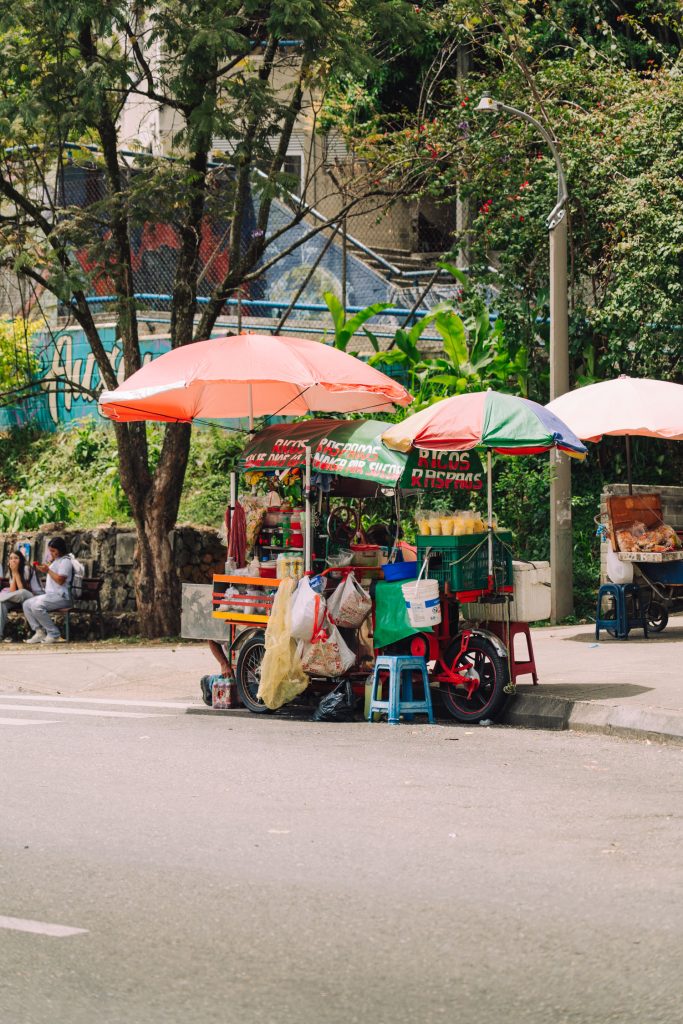
Hormigas Culonas, otherwise known as big ass ants, are a delicacy from Colombia’s Santander region. You’ll encounter lots of street vendors selling these fat-bottomed critters when wandering around Medellín. I was too scared to try them, since I’d been nauseous for most of my Colombia trip (probably because of the heat and sleep deprivation), so I can’t tell you what they taste like. But I’ve been told their flavor is not unlike popcorn and fried chicken. If you’re braver than I am, give them a try!


Is Medellín Safe to Visit?
The answer to this question has changed dramatically over the past few decades. From a time where the city was violence-ridden, it has transformed into a creative city with an entrepreneurial spirit. Currently, Medellín is generally safe, with petty theft being the largest safety risk in touristy areas. However, it’s not the safest city in the world, so safety precautions must be taken when visiting the city. Furthermore, there are areas travelers must always avoid.
Colombia is no Europe, where I’m used to be able to walk around without any concern for my safety. Besides the concerns any woman has when going about alone, I generally feel safe. In Colombia, however, safety is not a given. Man or woman: it’s best to not go wandering around by yourself if you don’t know where you’re going. One street might be safe, while the next corner might be a hotspot for gang violence.
Besides knowing what public transportation and areas are safe for travelers to use and visit, I recommend doing a guided tour on your first day in the city. The guide will tell you what areas and specific streets to avoid, and how to behave yourself in public. I personally find this the best way to get a feel for the lay of the land and general safety rules.


As I mentioned when discussing the Plaza Botéro, downtown Medellín (El Centro and La Candelaria) is not the safest area for travelers. While you must stay vigilant during the day, it’s best to avoid the center at night, when drug addicts and other seedy figures roam the streets. Similarly, it’s best to visit Comuna 13 with a tour, although it’s generally safer here than in El Centro. Other areas to avoid are the northeastern comunas of Aranjuez, Castilla, Manrique and Moravia, and Bello, most parts of Buenos Aires and Doce de Octubre.
Besides sticking to Medellín’s safer areas, you must always stay vigilant and shouldn’t put your valuables on display. The Colombians have a saying for this: “No dar papaya,” which means “don’t flaunt what you have.” It’s quite common for thieves to race by on motorbikes and grab your phone if you show it on the streets. And, as in any big city, pickpockets abound in the busiest neighborhoods.
And finally, something I never thought I would say: men must be especially vigilant in Medellín’s nightlife districts. A common, and potentially dangerous, scam in Provenza, El Poblado and other clubbing areas revolves around women buying male tourists a drink and drugging them. Once they’ve taken him home, or entered their hotel room, they dispose him of his valuables. So, guys, when a very pretty woman starts flirting with you, it might just be too good to be true.

Where to Stay in Medellín
The best areas to stay in Medellín are El Poblado and Laureles. El Poblado is one of Medellín’s bigger districts containing popular nightlife areas like Provenza, while Laureles is its trendy, residential sister popular among digital nomads and expats. Both areas offer a wide range of hotels and hostels suitable for every budget. My favorites in El Poblado are the luxurious Elcielo Hotel and the equally stunning mid-range Luum Boutique Hotel. Laureles offers a bit more industrial grit with the mid-range Urbit Social Lofts, which would be my top choice when I come back to Medellín.
How to Get to Medellín
Even when traveling domestically, the best way to get around Colombia is by plane. The country is so big, long travel distances tend to add up. Furthermore, Colombia’s borders are often violent due to many ongoing conflicts. So, if you’re not staying somewhere close like Guatapé, the best way to get to Medellín is by plane.
Wherever I am in the world, I always use Skyscanner to find the cheapest flights. So either visit their website, or use the widget below.
Best Time to Visit Medellín
Medellín is called the City of Eternal Spring for good reason, since it has good weather year-round. I thus think you’ll be fine visiting Medellín in every season, although you’ll see more rain during the rainy seasons. The first dry season runs from December to March and is Medellín’s busiest season. The second runs from June to August and sees fewer crowds, although it gets busier around the Feria de las Flores. My favorite time to visit though, is at the end of the shorter rainy season in May. This is a quieter time in Colombia, but the weather tends to be good. And when it rains, it rains at night.


How to Get Around Medellín
Medellín has an extensive public transport network with buses, metros and cable cars. Of all these options, buses tend to be the most confusing, since timetables change last-minute and it’s easy to mix up your stops. It’s fine to use them to get to nearby towns though, but in the city, I’d opt for metros and the metrocable instead. These are very straightforward but require you to buy a ticket at one of the major stations.
And then there are taxis. You’ll see plenty of them driving around, but for your own safety it’s best not to hail one on the streets. Unfortunately, unregistered taxis are sometimes used to rob tourists. But sometimes you’ll have to use one, especially when you want to go anywhere at night. So, the safest way to order a taxi is through apps like Uber, or via your hotel. And even then, always text the taxi’s number plate to a friend and check Google Maps during the trip to see whether you’re going the right way.


FAQs About Things to Do in Medellín
What are the best free things to do in Medellín?
There are plenty of great free things to do in Medellín, like visiting the Plaza Botéro and Comuna 13 on a free walking tour and seeing the view from the Rafael Uribe Uribe Palace of Culture. Other things you could do when on a budget are visiting Pueblito Paisa, and hiking through the Parque Arvi.
What are the most unique things to do in Medellín?
Personally, I think the most unique thing you can do in Medellín is taking a salsa lesson and attending a social. Although not as present as in Cali, Medellín has a buzzing salsa scene. Participating is one of the best ways to get to know the city.
Less festive but very important: visiting the Casa de La Memoria is one of the most under-the-radar yet interesting things to do in Medellín. This museum tells the story of the victims of the city’s violent past and offers a raw look into how the city pushed back.
What shouldn’t I do in Medellín?
I’ve said it before and I’ll say it again: please don’t do a Pablo Escobar tour when visiting Medellín. These tours directly contribute to the wealth of former drug lords and perpetuate the harmful stereotype of Colombia as a drug paradise. Do a proper city tour and visit Casa de La Memoria instead.
Is Medellín worth visiting?
Medellín is 100% worth visiting. This city has so much to offer: from incredible Colombian and international cuisine, to an interesting history, modern art and colorful festivals. There’s something to do here for anyone, so the question shouldn’t be whether a visit is worth it, but how to fit everything into your Medellín itinerary.


